
Criminal Cases in the Onslow County Courts
Onslow County belongs to Prosecutorial, District Court, and Superior Court District 5. Superior Court at 625 Court Street tries felonies and handles certain appeals. District Court at 602 Anne Street hears misdemeanors, traffic matters, infractions, and the first stages of felony cases. The Magistrate’s Office at 717 Court Street handles warrants, initial judicial process, and release conditions. These are state courts, so Jacksonville, Holly Ridge, and Swansboro do not maintain separate municipal criminal case databases.
Cindy Casteen, the elected Clerk of Superior Court, is the custodian of Onslow County criminal case records. The main clerk line is 910-478-3600. Filed case material can include the charging paper, event register, hearings, motions, orders, plea or verdict, judgment, sentence, and financial obligations. The prosecutor’s office and defense counsel participate in the case, but they are not the public records counter. Court copies come from the clerk.
Onslow Criminal Courts on Court Street
The local court system uses two courthouse addresses. Felony files and expunction filings center on the Superior Courthouse at 625 Court Street. District Court operates at 602 Anne Street. The Criminal District Court cashier for traffic and most misdemeanor matters is on the second floor of the Summersill Building, between courtrooms 1 and 2. Both courthouse sites list weekday hours from 8 a.m. to 5 p.m.
The official Onslow County courthouse page provides the public building information shown here.
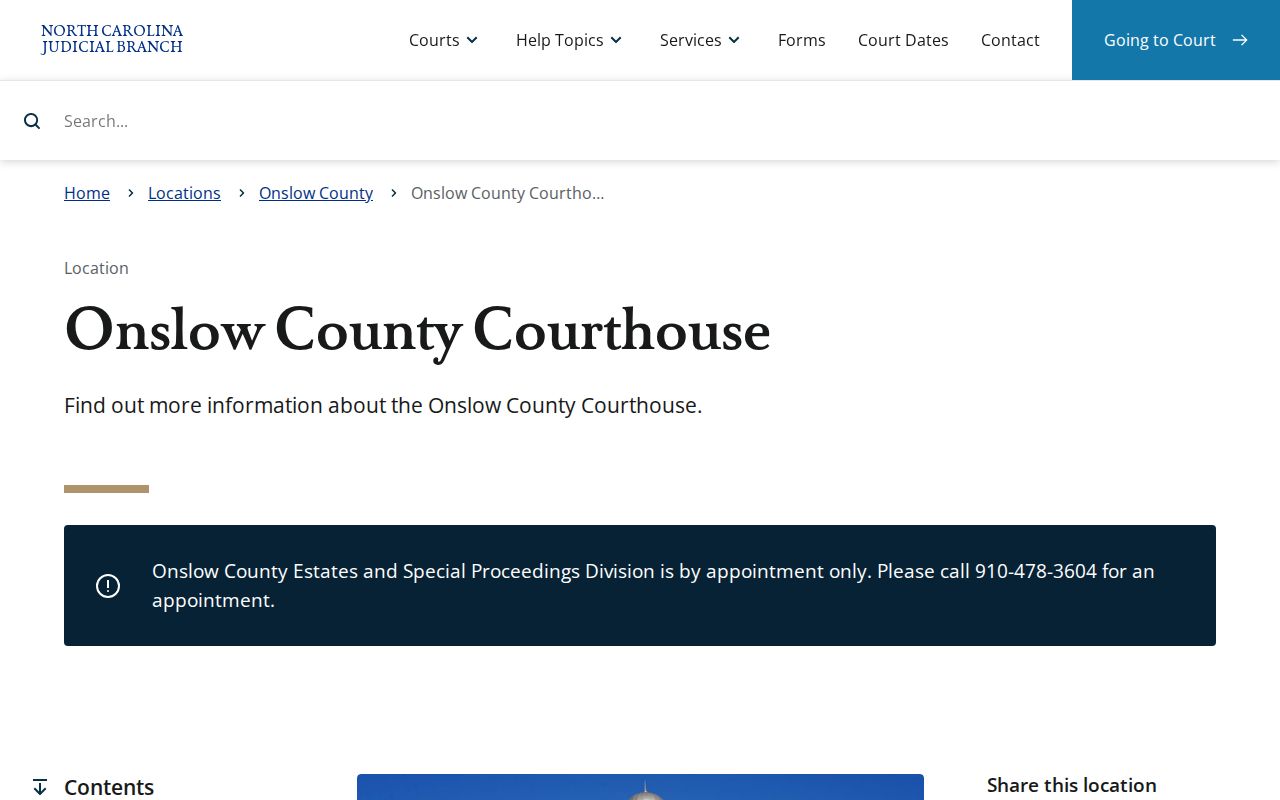
That source also identifies free parking at Court and Tallman Streets and on Old Bridge Street across from Summersill, plus wheelchair access and other visitor services.
Onslow Superior Court
625 Court St.
Jacksonville, NC 28540
910-478-3600
Felony files, judgments, certified searches
Onslow District Court
602 Anne St.
Jacksonville, NC 28540
910-478-3600
Misdemeanor, traffic, infraction, felony preliminary files
Onslow Magistrate
717 Court St.
Jacksonville, NC 28540
910-478-3619
Warrants and initial release process
How to Search Case Records
The North Carolina eCourts Portal is the main remote search for Onslow County criminal case records. Search by party name or record number. Then use the Onslow location and criminal category when those controls are offered. A case number is the strongest key. For common names, compare filed date, court division, charge details, and other public identifiers before deciding that a result belongs to the right person.
- Open Smart Search in eCourts Portal and enter a party name or complete Onslow County case number.
- Set the location to Onslow County and select the relevant criminal or infraction category where available.
- Narrow a broad result with filed dates and case status rather than assuming the first same-name record is correct.
- Open the case summary and register of actions to review counts, hearings, events, and disposition status.
- Contact the clerk for a certified search, a document that cannot be downloaded, or an older record that does not appear.
| Field label | Type | Required | Notes |
|---|---|---|---|
| Smart Search | Tab | No | Main public search area |
| Search criteria | Text | Yes | Party name, case number, or supported attorney search |
| Location | Dropdown | No | Select Onslow County to reduce same-name results |
| Case category/type | Filter | No | Choose criminal or infraction when offered |
| Filed date range | Date controls | No | Narrows old or common-name results |
| Case status | Filter | No | Open, closed, or available system values |
Portal labels can change as the statewide system is updated, so use the live controls rather than relying on an old screen. Sort and pagination tools help with a broad result set. If the online summary omits a needed filing, note the case number and ask the Onslow County clerk whether the document is public and available at the counter.
Onslow Criminal Cases After eCourts
Onslow County converted to Odyssey and Enterprise Justice on February 3, 2025, as part of a 13-county coastal rollout. Statewide conversion finished on October 13, 2025. That shift placed Onslow County criminal cases in the same statewide Portal system as the other 99 counties and changed both public search and clerk workflow. Labels and document access can still change with system updates.
The North Carolina eCourts program page records the statewide status and system context.
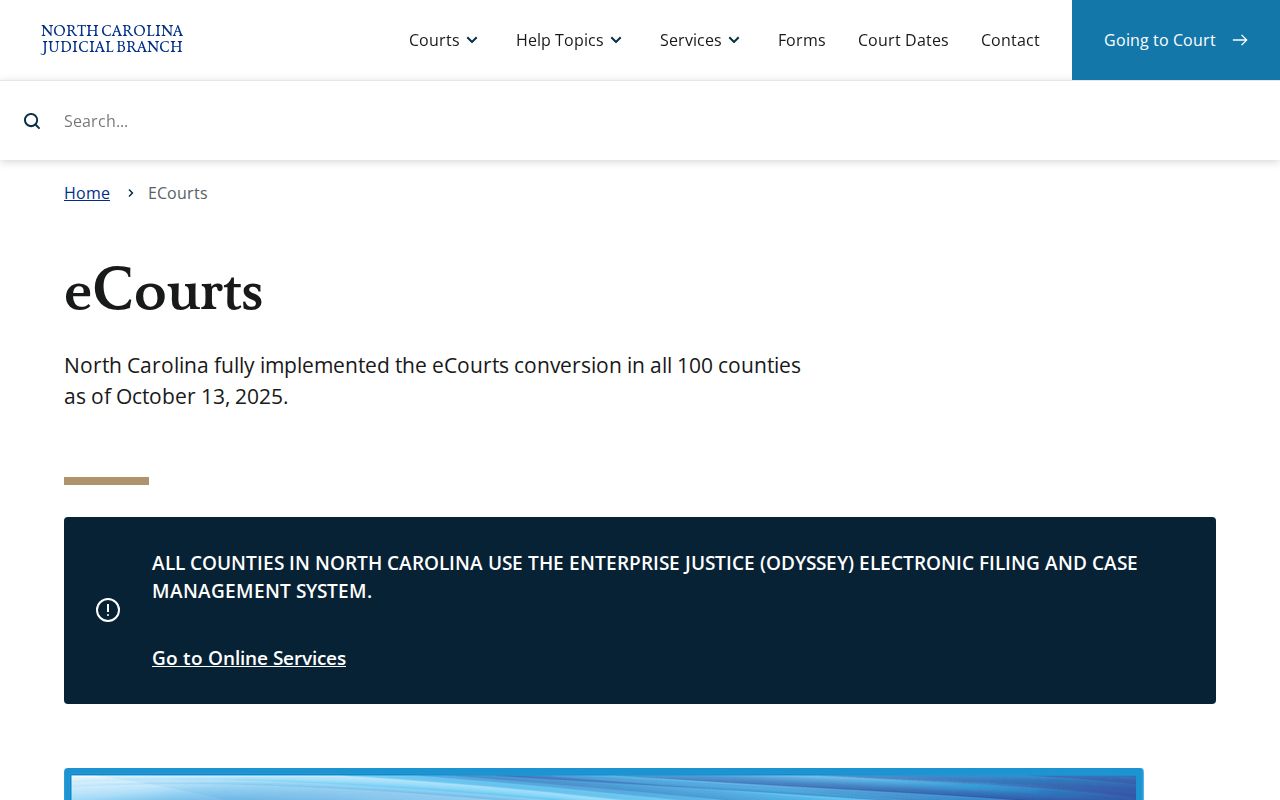
The Portal may show a register of actions and some documents, but security level, login functions, older paper holdings, and confidential status affect what can be opened remotely.
A courthouse terminal remains useful when home access fails. Any clerk’s office can provide a free noncertified county or statewide court search. Results may be viewed or emailed without a charge, while printing may cost extra. A 2025 court kiosk program also added in-building scanners, printers, and payment functions in Onslow and selected counties.
What the Case File Shows
An Onslow County criminal case file is organized around the judicial case, not the booking. Its header identifies the case number, location, court division, case type, filed date, status, and an assigned judicial officer where applicable. Charge rows can show the offense text, statute or code, class, offense date, count sequence, and current disposition status. Events then build the history of the prosecution.
| Case Number & Court | Onslow location, District or Superior division, type, filed date, and status. |
|---|---|
| Charging Document | Complaint, citation, warrant, indictment, or another lawful charging paper and its filed counts. |
| Docket Entries | First appearance, probable-cause setting, arraignment, continuance, motion, plea, verdict, judgment, and appeal events. |
| Hearing Dates | Date, time, session or courtroom, hearing type, and status where public. |
| Disposition & Judgment | Guilty, dismissed, not guilty, transferred, or another coded result, with date and judge. |
| Sentence & Conditions | Confinement, probation, costs, fine, restitution, and public balance information. |
Social Security numbers, protected addresses, victim or minor details, and confidential, sealed, or expunged material do not belong in the public view.
Finding Onslow Criminal Court Dates
The Portal’s event register helps explain what has happened, while Find My Court Date serves the narrower task of locating a coming session. It supports searches by a name, citation, and county. A calendar entry is not the complete Onslow County criminal case record. It states where and when a matter is set, but it does not replace the filed charges, motions, disposition, or judgment.
The Judicial Branch Find My Court Date service supplies that calendar search.
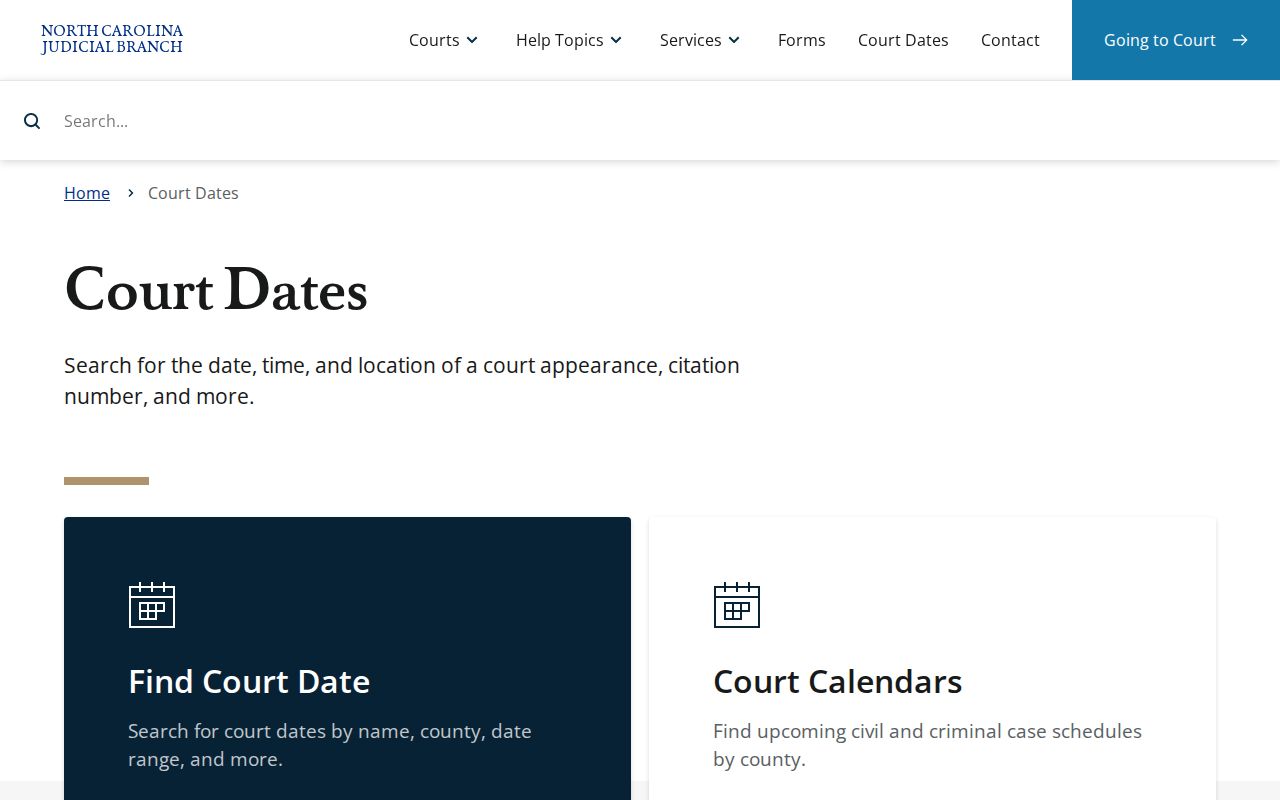
Because sessions can change, confirm a near-term appearance with the official listing or the clerk rather than relying on a saved screen.
A missed appearance can create a failure-to-appear or new judicial process in the event register. The docket entry should be read in context. It does not by itself explain why the date was missed or whether later court action cleared the process.
Stages of a Criminal Case
An arrest or summons can start the path, followed by magistrate process and prosecutor review. District Court adjudicates misdemeanors. A felony usually begins there for early proceedings and can move through probable-cause or grand-jury process to Superior Court. Superior Court then handles arraignment, pretrial issues, plea or trial, judgment, and sentence. Exact timing varies with the charge, custody, motions, and court schedule, so no fixed 24-hour or 48-hour case timetable should be assumed.
Case flow: Charges Filed › Arraignment › Pretrial › Plea or Trial › Disposition › Sentencing
A case may also show a remand, transfer, appeal, continuance, or failure-to-appear event. Each entry marks an action in the case, not necessarily its final result. Read the most recent disposition and judgment rows before treating an earlier event as current.
Reading Onslow Criminal Case Results
Disposition means how a filed charge ended. A conviction follows a guilty plea or verdict and judgment. A dismissal ends the charge without a conviction. An acquittal is a not-guilty result after trial. Nolle prosequi means the prosecutor formally chose not to continue the count at that time. A transfer or remand can move the matter without deciding guilt.
- Arraignment
- The proceeding where charges are formally presented and a plea may be entered.
- Indictment
- A grand jury’s formal felony accusation, which is not proof of guilt.
- Disposition
- The result attached to one charge, not always the status of every count in the case.
- Judgment
- The court’s final formal ruling, including guilt and sentence where there is a conviction.
- Concurrent
- Sentences served at the same time, unlike consecutive terms served one after another.
One Onslow County case can contain several counts with different outcomes. Read each sequence separately. “Disposed” only means the court entered an outcome; it does not mean every disposed count ended in conviction.
Certified Onslow Criminal Record Search
The Portal is not a certified background check. Any person may request a $25 certified, name-based search of one county’s court records through the Onslow clerk by using AOC-CR-314. The form can ask for the subject’s full name, aliases, birth information, race, sex, and other identifying data, plus criminal or infraction scope and a date range. The clerk certifies the indices searched and whether a public record was found.
The Judicial Branch AOC-CR-314 form page identifies the approved criminal record search document.
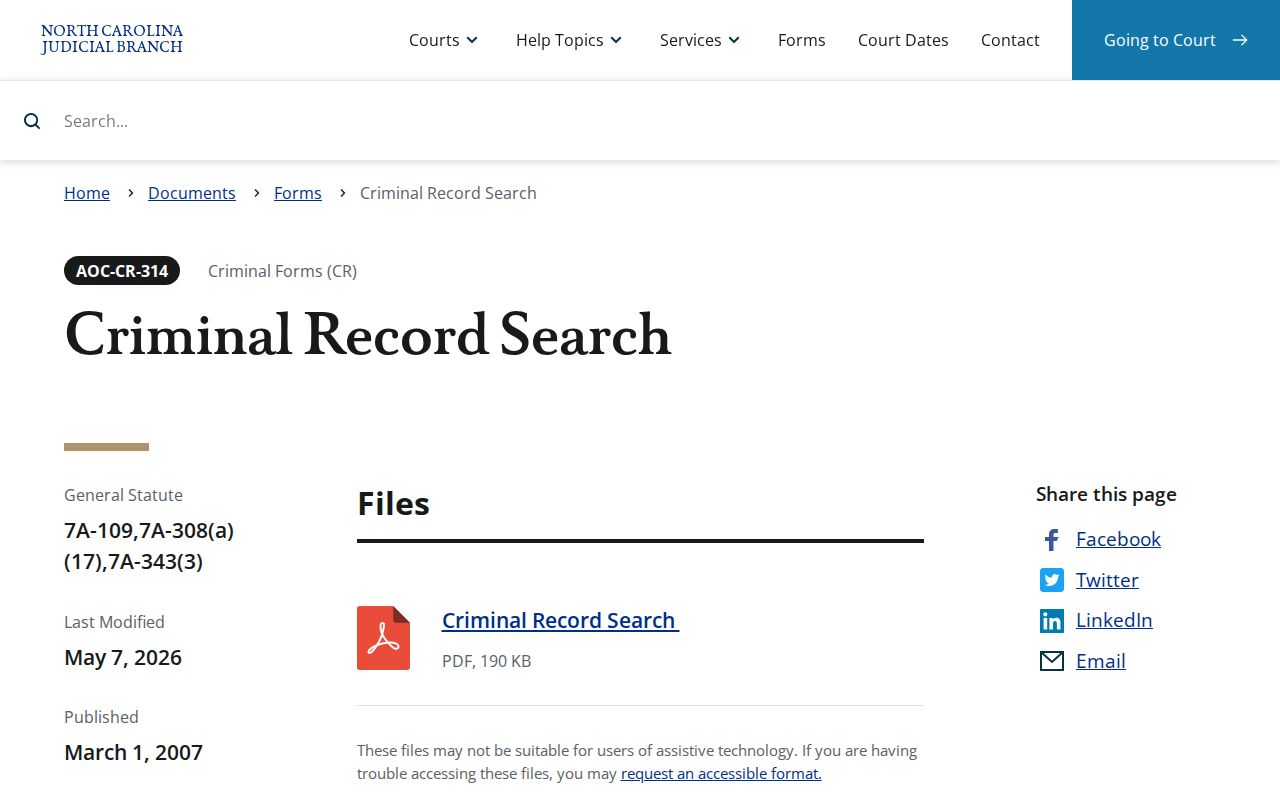
The raised-seal certification is county-limited. No court official can provide a certified statewide search on that form.
Mail submissions use a money order or certified check. Personal checks are not accepted. In person, the clerk accepts cash, money order, certified check, or card with a processing fee. A free terminal search is the better fit when certification is not needed.
Onslow Criminal Case Payments
Financial rows in an Onslow County criminal case can show court costs, fines, restitution, balance, and payment information to the extent public. Those entries are part of the judgment record. They should not be read apart from the disposition and sentence that created the obligation. Criminal District Court payment service is at the Summersill Building’s second-floor cashier, between courtrooms 1 and 2.
The official Onslow payment information documents local payment options.
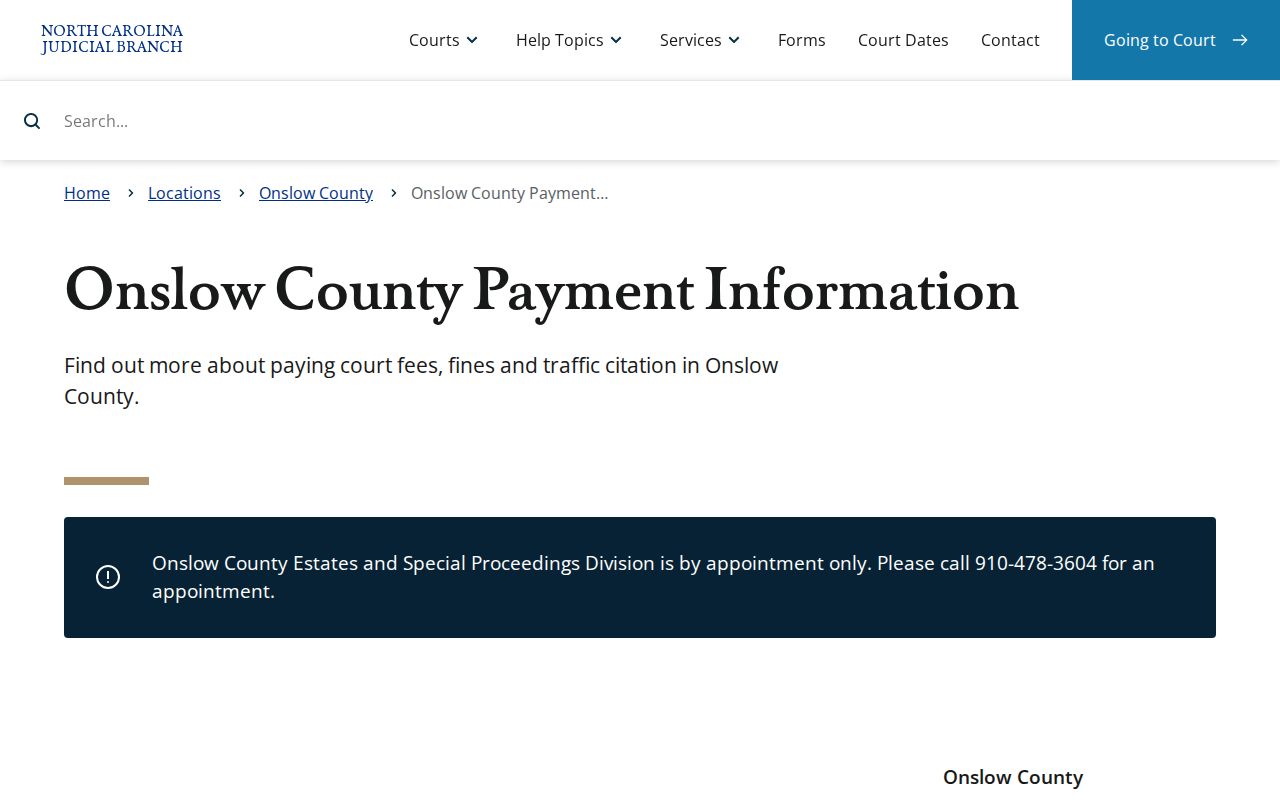
Mail payments require a money order or certified check, while in-person payments can use cash, an accepted card with processing cost, a money order, or a certified check.
Payment data does not establish the meaning of a charge. Use the judgment and disposition lines for the court result, then confirm an unclear balance or cashier direction with the clerk.
Access & Restrictions
G.S. 7A-109 generally opens clerk records for public inspection unless another law or a court order restricts them. North Carolina Public Records Law does not override protections for juvenile cases, sealed files, expunged matters, protected victims, confidential addresses, or sensitive identifying data. Portal access can also be narrower than the paper court file because document images carry security settings.
If an Onslow County criminal case does not appear, ask the clerk about spelling, an older filing year, paper records, or a nonpublic status. Supply the approximate year, charge, and case number when known. A missing result is not proof that no case ever existed. It may reflect data conversion, a sealed or expunged file, a juvenile matter, or an indexing problem.
Access point: A public case summary is not certification. Use the Onslow clerk for certified results, older files, and documents not available through Portal.
Body-camera material, sheriff reports, and booking records remain with other custodians. The broader Onslow County criminal history overview explains how those records relate without treating them as part of the clerk’s case file.